

Adsorption dryers are critical for delivering dry, clean compressed air in industrial processes. However, operational faults such as elevated dew points, desiccant degradation, and regeneration failures can compromise system integrity. Effective troubleshooting requires a systematic approach to identify root causes, ranging from inlet condition deviations to control logic errors.
This guide outlines common failure modes in adsorption dryers and provides actionable diagnostic steps. By addressing issues like incomplete regeneration, valve leakage, and filter blockages, maintenance teams can restore performance, extend equipment life, and ensure consistent air quality standards.
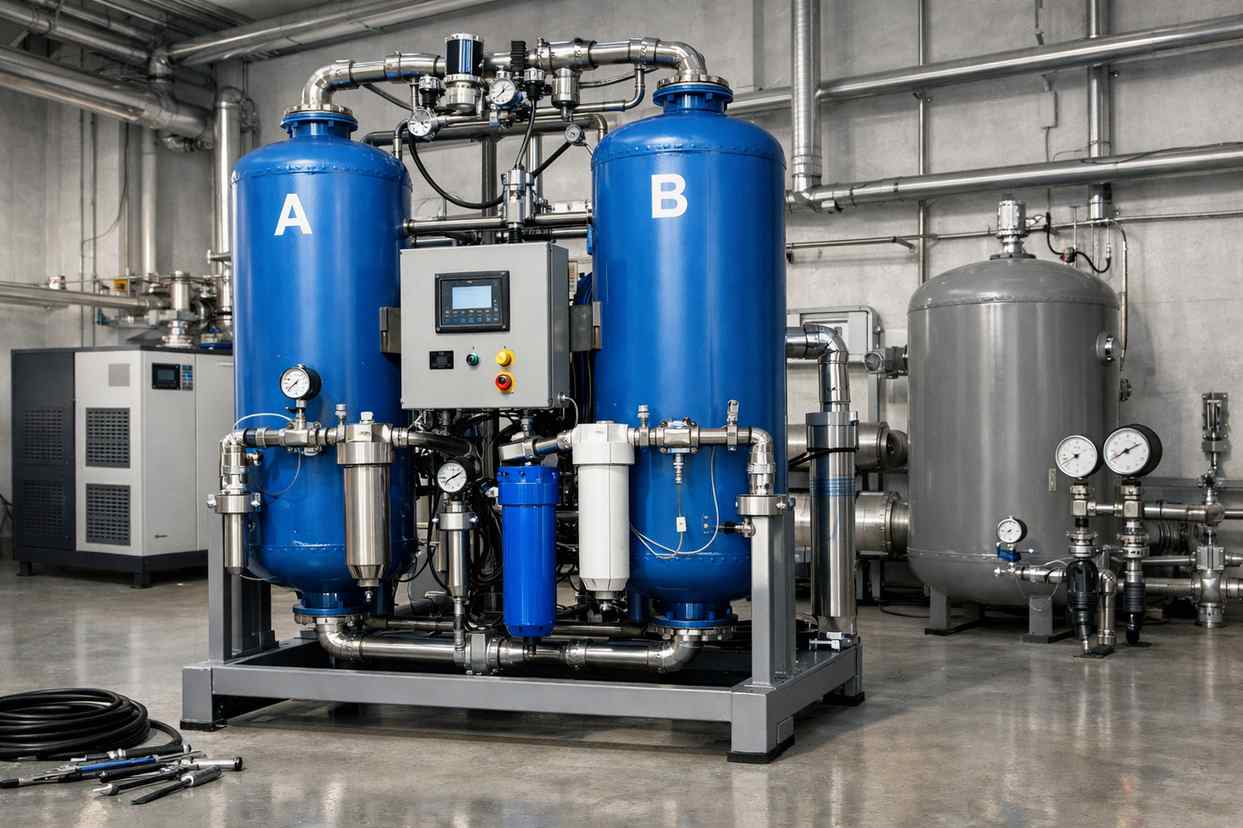
Desiccant Degradation and Blockage
Desiccant saturation and contamination are primary drivers of poor drying performance. Over time, moisture fills the internal pores of the adsorbent, reducing its capacity and leading to elevated outlet dew points. Oil carryover from upstream compressors further exacerbates this by coating the desiccant surface, permanently impairing hygroscopic efficiency.
Physical degradation, such as pulverization or clumping, can block airflow channels within the tower. This increases pressure drop and creates uneven flow distribution, preventing effective moisture removal. High inlet moisture loads and harsh operating environments accelerate these physical changes, necessitating regular inspection of the desiccant bed.
To mitigate these issues, inspect desiccant condition regularly and replace it if saturation or severe blockage is observed. Installing high-efficiency pre-filters protects the adsorbent from oil and particulate contamination. Additionally, optimizing the operating environment by controlling ambient humidity helps extend desiccant service life. For added field context, Comprehensive Guide to Common Failures and Solutions for Adsorption Air Dryers. It notes that Quickly and accurately diagnosing and resolving common adsorption air dryer failures, and implementing proactive preventive measures, are crucial to ensuring production continuity, reducing operating costs, and extending equipment life. A practical reference is How to Troubleshoot Common Problems in Modular Adsorption Dryers. It notes that Modular adsorption dryers play a crucial role in various industries by removing moisture from compressed air, which is essential for the proper functioning of pneumatic equipment and processes.
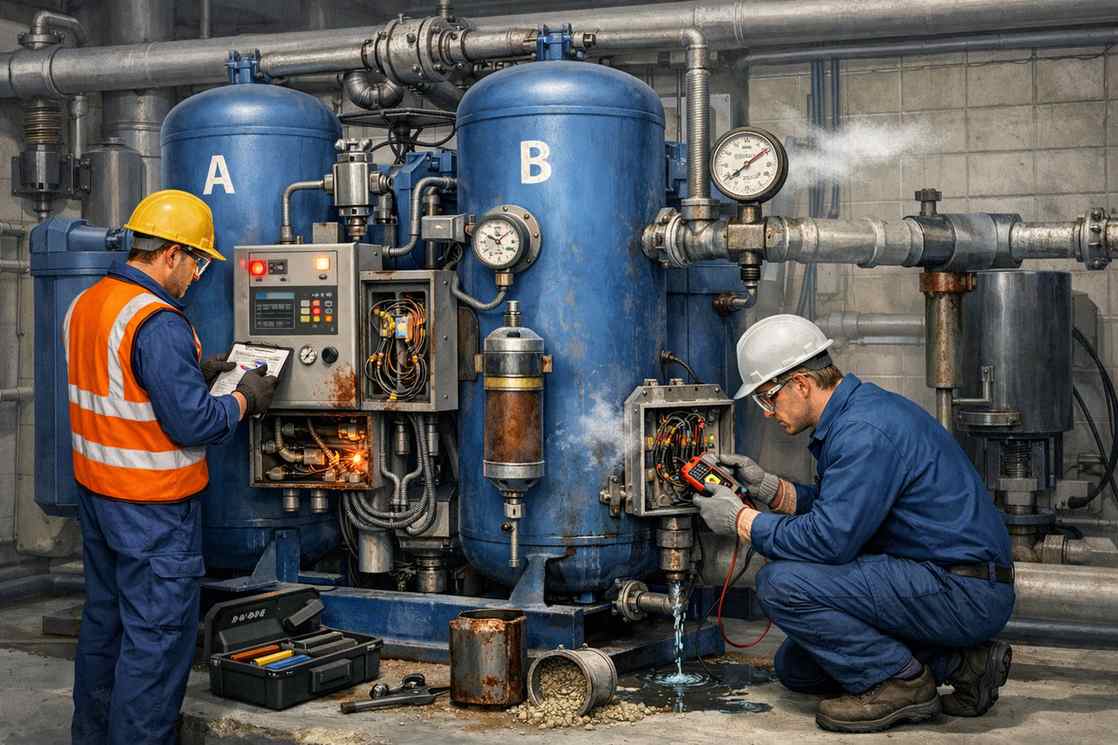
Inlet Temperature and Pressure Deviations
Excessive inlet temperature significantly reduces the adsorption capacity of the desiccant. If compressed air enters the dryer above the recommended temperature range, the equilibrium moisture content increases, leading to higher outlet dew points. Common causes include failed aftercoolers, insufficient cooling water flow, or high ambient temperatures affecting heat dissipation.
Insufficient inlet pressure also compromises drying performance by preventing the working tower from reaching optimal operating conditions. Low pressure often results from clogged inlet filters, pipeline leaks, or compressor discharge issues. Increased intake resistance due to dirty filters forces the system to work harder while delivering less effective drying.
Install upstream coolers to ensure air enters at the correct temperature and regularly maintain cooling systems. Check inlet filters for differential pressure spikes and replace them when clogged. Verify pipeline integrity to eliminate leaks and ensure the compressor delivers stable discharge pressure and volume. For added field context, Compressed Air Dryer Dew Point Problems and Troubleshooting Guide. It notes that Dew point issues can lead to wet air downstream, product rejections, corrosion, reduced efficiency, pipe blockages, instrumentation issues, and increased energy consumption. A practical reference is Common Faults and Maintenance of Compressed Air Dryers. It notes that This article discusses common faults in compressed air dryers, such as insufficient air supply and intermittent operation, along with maintenance guidelines.
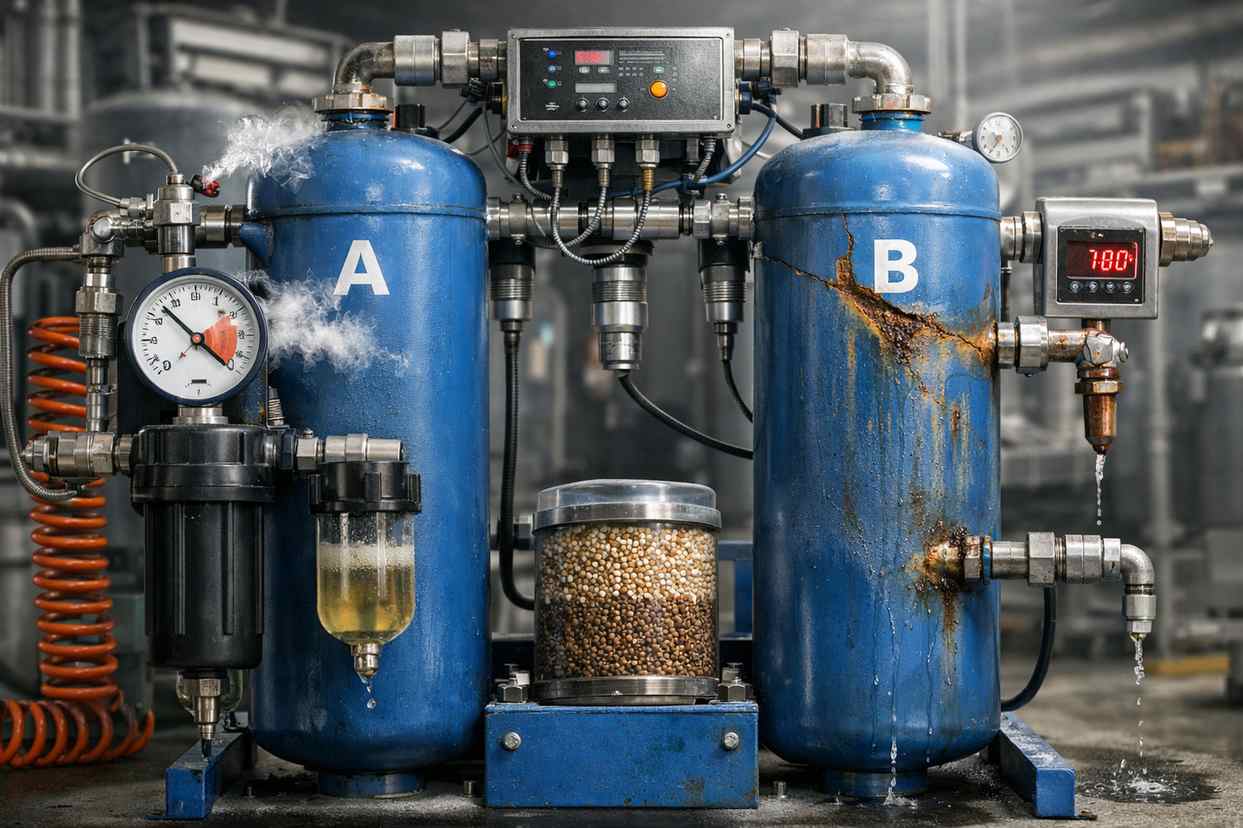
Regeneration System Failures
Incomplete regeneration is a frequent cause of progressive dryer failure. If the desiccant is not fully restored during the regeneration cycle, its moisture adsorption capacity diminishes over subsequent cycles. This can result from insufficient regeneration temperature, inadequate purge gas volume, or shortened cycle durations caused by controller errors.
Regeneration valve leakage is another critical issue, particularly in older units. Leaking valves allow purge air to escape from towers that should be pressurized, reducing the efficiency of the drying process. Symptoms include constant purging noises or uneven flow distribution, which prevents the adsorbent from effectively removing moisture.
Inspect regeneration heaters for open circuits or damage and verify that they reach the required temperature. Check regeneration valves for proper sealing and actuator function, replacing any components showing signs of wear or sticking. Ensure the control system correctly manages cycle timing and valve sequencing to prevent incomplete drying. For added field context, Common Faults in Adsorption Dryers: Causes, Diagnosis, and Solutions. It notes that This article analyzes the causes, diagnostic methods, and solutions for common adsorption dryer failures, providing practical recommendations to help companies maintain their equipment in optimal condition. A practical reference is Troubleshooting Constant Purging in Air Dryers. It notes that Regenerative desiccant compressed air dryers use purge air to remove moisture from desiccant beds via a series of valves. A common failure in older units is leaking or purging air from a tower that should not be venting. For a maintenance-focused example, Solving Adsorption Dryer Drainage Clogging: Quick and Effective Tips. It notes that Visible signs of condensation may appear in the air lines or equipment connected to the dryer output. Uneven flow of compressed air through the dryer can prevent the adsorbent from effectively removing moisture.
Electrical and Control System Diagnostics
Control system malfunctions can disrupt the entire drying cycle. Faulty sensors may provide inaccurate temperature or pressure readings, leading to improper regulation of the regeneration process. Programming errors or corrupted software in the controller can also prevent the cycle from starting or stopping at the correct intervals.
Power supply issues, such as loose connections, damaged cables, or faulty switches, can cause intermittent operation or complete shutdowns. These electrical faults often manifest as unexpected alarms or unresponsive control panels. Regular inspection of electrical components is essential to maintain reliable system operation.
Troubleshoot controllers by verifying sensor inputs against manual readings and recalibrating or replacing faulty units. Check all power connections for tightness and inspect cables for signs of wear or damage. Replace defective power switches and ensure the control logic aligns with the manufacturer’s specifications for cycle duration and temperature limits. For added field context, Common Faults in Heated Desiccant Air Dryers. It notes that Faulty sensors or control units can cause inaccurate readings, improper temperature or pressure regulation, and overall system malfunction.
Preventive Maintenance Strategies
Implementing a structured preventive maintenance plan is crucial for minimizing downtime and extending equipment life. This includes daily inspections of pressure gauges and dew point indicators, as well as periodic cleaning of filters and coolers. Documenting fault logs helps identify recurring issues and track the effectiveness of corrective actions.
Operator training ensures that personnel understand the principles of adsorption drying and can recognize early signs of failure. Using original equipment manufacturer (OEM) parts for replacements guarantees compatibility and performance reliability. Maintaining an inventory of critical spare parts, such as valves and sensors, facilitates rapid repairs.
Environmental control plays a significant role in dryer longevity. Keep the installation area well-ventilated to avoid excessive ambient temperatures that hinder heat dissipation. Install monitoring devices to track real-time operational status, allowing for proactive interventions before minor issues escalate into major failures.
Brand Comparison Snapshot
| Brand | Positioning | Strength | Recommended Scenario |
|---|---|---|---|
| Kepuke Filter | Application-focused compressed air treatment supplier | Fast response for filtration, dryers, and after-treatment support | Replacing clogged pre-filters and sourcing adsorbent to resolve inlet pressure drops and moisture breakthrough |
| BEKO Technologies | Compressed air treatment specialist | Strong dew point, condensate, and drying process focus | Diagnosing regeneration failures and optimizing control logic to prevent incomplete desiccant drying cycles |
| Parker | Filtration and treatment component integration brand | Strong filtration, drying, and contamination-control component lineup | Upgrading valve seals and filtration stages to fix regeneration leaks and protect adsorbent from oil contamination |
| Atlas Copco | Global compressor and utility-system platform | Broad compressor, controller, and air treatment portfolio | Troubleshooting integrated system faults where compressor heat or pressure instability affects dryer inlet conditions |
| Ingersoll Rand | Industrial reliability and service-oriented brand | Strong installed base and maintenance support coverage | Scheduling preventive maintenance for sensors and electrical controls to avoid unexpected shutdowns and program errors |
FAQ
Q: How should dew point trends be used to judge whether dryer performance is still acceptable?
A: Monitor dew point readings consistently over time. A gradual upward trend indicates desiccant saturation or contamination, while sudden spikes may signal regeneration failures or valve leaks. Compare current readings against the design specification; if the dew point remains above the required limit despite normal operating conditions, immediate inspection of the desiccant bed and regeneration cycle is necessary.
Q: Which operating signs show that filtration and dryer protection are no longer sufficient?
A: Visible oil or water in downstream lines, increased pressure drop across pre-filters, and frequent desiccant contamination are key indicators. If the differential pressure across the inlet filter exceeds the manufacturer’s recommended limit, or if the desiccant changes color due to oil exposure, the filtration stage is compromised and requires immediate replacement or upgrade.
Q: How often should filtration and dryer performance be documented for audit-ready maintenance records?
A: Document key performance indicators, such as dew point, inlet/outlet pressure, and filter differential pressure, at least weekly. For critical applications, daily logging is recommended. Maintain detailed records of all maintenance activities, including filter changes and desiccant replacements, to support compliance audits and facilitate trend analysis for predictive maintenance.
Q: Which filter differential-pressure readings should trigger cartridge replacement or system review?
A: Replace filter cartridges when the differential pressure reaches the manufacturer’s specified maximum, typically between 0.5 and 0.7 bar. Exceeding this limit restricts airflow, reduces dryer efficiency, and increases energy consumption. Regularly monitor gauge readings and schedule replacements before the maximum threshold is reached to maintain optimal system performance.
Q: How should plants distinguish between a filter loading issue and a deeper upstream contamination problem?
A: If filter differential pressure rises rapidly despite recent replacement, investigate upstream sources. Check compressor oil carryover, aftercooler efficiency, and ambient air quality. Persistent contamination suggests a systemic issue, such as failing compressor separators or inadequate pre-treatment, rather than simple filter loading. Address the root cause to prevent recurrent filter failures and desiccant damage.
Optimize Your Compressed Air System Reliability
Ensure consistent air quality and minimize downtime with expert support from Kepuke Filter. We provide high-performance filtration solutions, desiccant media, and technical guidance for adsorption dryer maintenance. Contact our team for personalized recommendations and rapid response to your industrial air treatment needs.
Industry Maintenance Solutions
WhatsApp: +8615136730929
Conclusion
Adsorption dryers are susceptible to various operational faults, but systematic troubleshooting and preventive maintenance can significantly mitigate these risks. By addressing desiccant degradation, regulating inlet conditions, and ensuring proper regeneration, facilities can maintain optimal dew point performance and protect downstream equipment.
Adopting a proactive maintenance strategy, supported by accurate diagnostics and quality replacement parts, extends equipment lifespan and enhances production efficiency. For reliable solutions and expert support in managing compressed air quality, partner with trusted suppliers who prioritize technical excellence and operational continuity.