

Screw air compressors are critical pneumatic assets in modern industrial facilities, where operational stability directly influences production line performance and product quality. Among the various operating parameters, the pressure setting range is a primary determinant of energy consumption, operational efficiency, and equipment lifespan.
This technical guide outlines the principles governing pressure configurations, the factors influencing viable setting ranges, and standardized adjustment methodologies. By aligning pressure parameters with specific system requirements and maintaining rigorous calibration protocols, facility managers can ensure consistent air delivery while minimizing energy waste.
Principles of Load and Unload Pressure
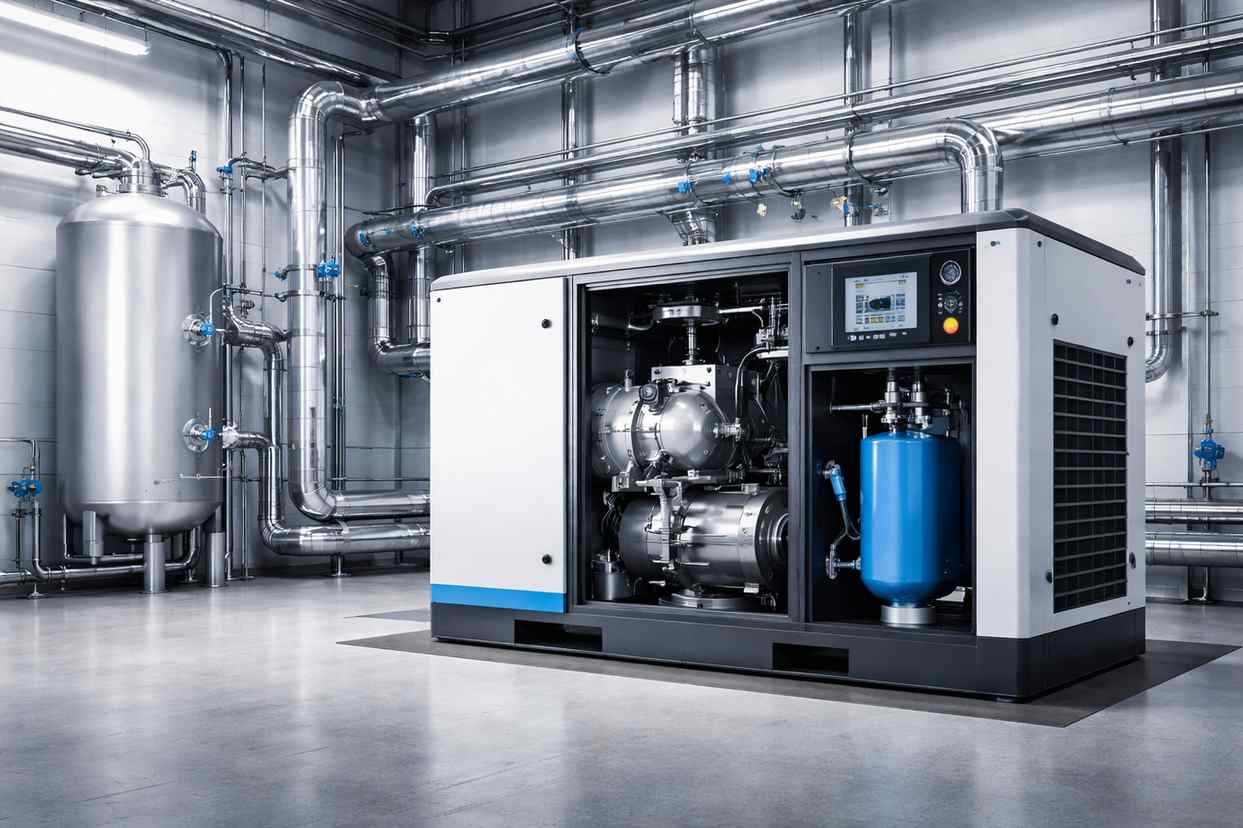
Screw air compressors operate using intermeshing male and female rotors within a cylinder to draw in, compress, and discharge air. Effective operation requires adherence to a defined pressure range, primarily governed by two parameters: load pressure and unload pressure. Load pressure represents the threshold at which the compressor initiates compression and delivers air to the system, while unload pressure marks the point where compression ceases and the unit enters an idle state.
The precise definition of these thresholds dictates the compressor's energy efficiency. Pressure is typically managed via a pressure switch or digital controller, which must be calibrated to the specific requirements of connected pneumatic devices. Even if the manufacturer recommends a higher standard, the set-point should reflect the actual minimum pressure needed for downstream applications to avoid unnecessary energy expenditure.
Regulators play a crucial role in this process by controlling pounds per square inch (PSI) to prevent overpressurization, which wastes energy and increases cubic feet per minute (CFM) requirements. Furthermore, regulators help dampen PSI pulses during the compressor's cycling process, ensuring a smoother flow of compressed air to sensitive instrumentation and tools. For added field context, Air Compressor Pressure Switch: Adjusting the Right Pressure. It notes that Pressure is a critical parameter in air compressors, typically adjusted using a pressure switch. The compressor's pressure set-point should be determined by the specific pressure requirements of the connected pneumatic devices, even if. A practical reference is How to Adjust an Air Compressor Regulator. It notes that An air compressor regulator controls the pounds per square inch (PSI) for your compressed air needs. It helps prevent overpressurization, which wastes energy and increases CFM requirements.
Factors Influencing Pressure Setting Range
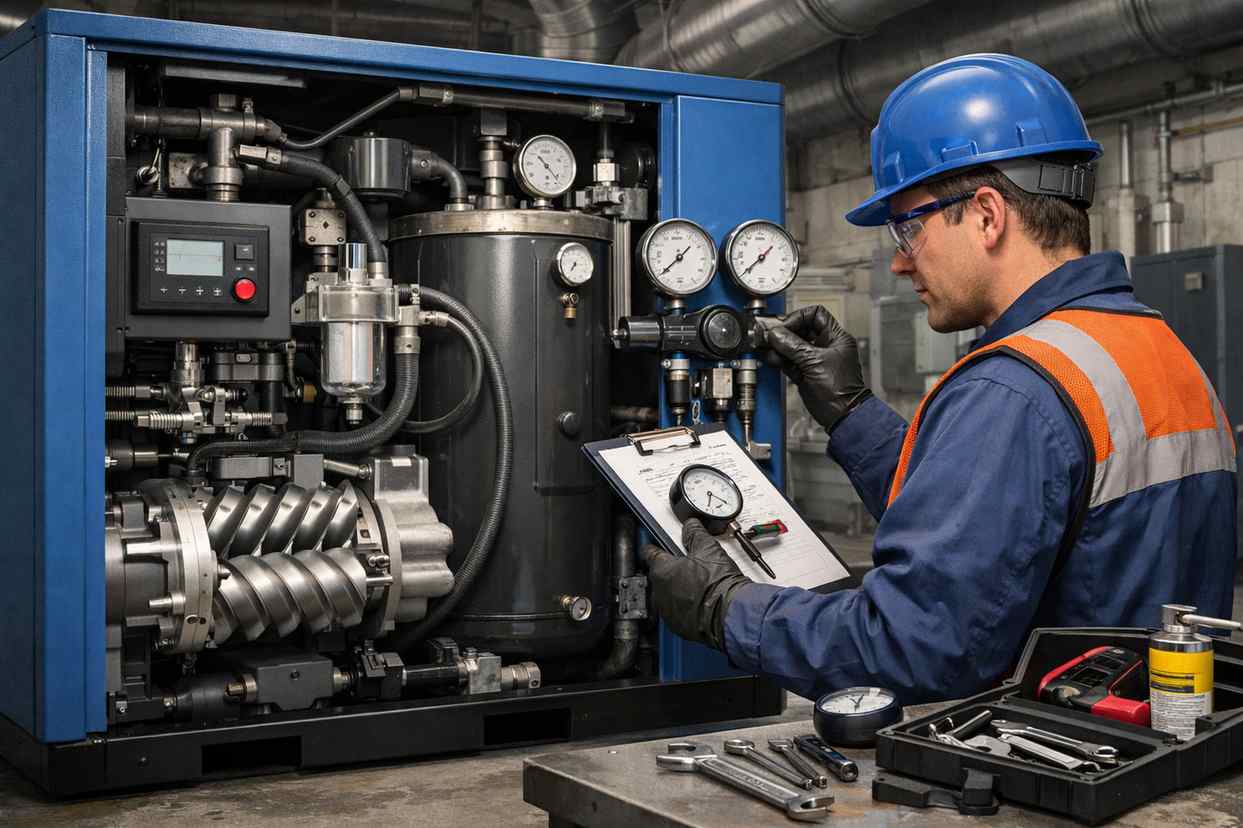
The appropriate pressure setting range is contingent upon system requirements, equipment specifications, and environmental conditions. High-pressure applications, such as spray painting or specific pneumatic tools, necessitate higher load and unload pressures. Conversely, industries like food processing or pharmaceutical manufacturing require stable, narrow pressure bands to maintain process integrity and product quality.
Equipment performance metrics, including free air delivery (FAD) and motor power, also define viable pressure limits. Units with higher FAD capabilities can support elevated pressure settings, whereas lower-power motors may require reduced pressure limits to prevent overload. Environmental factors such as ambient temperature and humidity further impact performance; high temperatures reduce air density and compression efficiency, potentially requiring compensatory pressure adjustments.
Maintenance status significantly affects pressure stability. Clogged air or oil filters create restrictions that lead to inaccurate pressure readings and system instability. Regular inspection of seals, gaskets, and hose connections is essential to detect leaks that could cause pressure decay, ensuring that the compressor operates within its designed efficiency envelope. For added field context, Maintenance and Troubleshooting Tips for Screw Type Compressors. It notes that Screw type compressors are the backbone of many industrial operations, providing reliable and efficient air compression. A practical reference is Rotary Screw Compressors: Maintenance Best Practices for Enhanced Performance. It notes that To enhance performance, regularly inspect rotary screw compressors for air, moisture, and oil leaks. For oil-lubricated models, periodically check all seals, gaskets, and hose connections for signs of leakage.
Methods for Adjusting Pressure Parameters
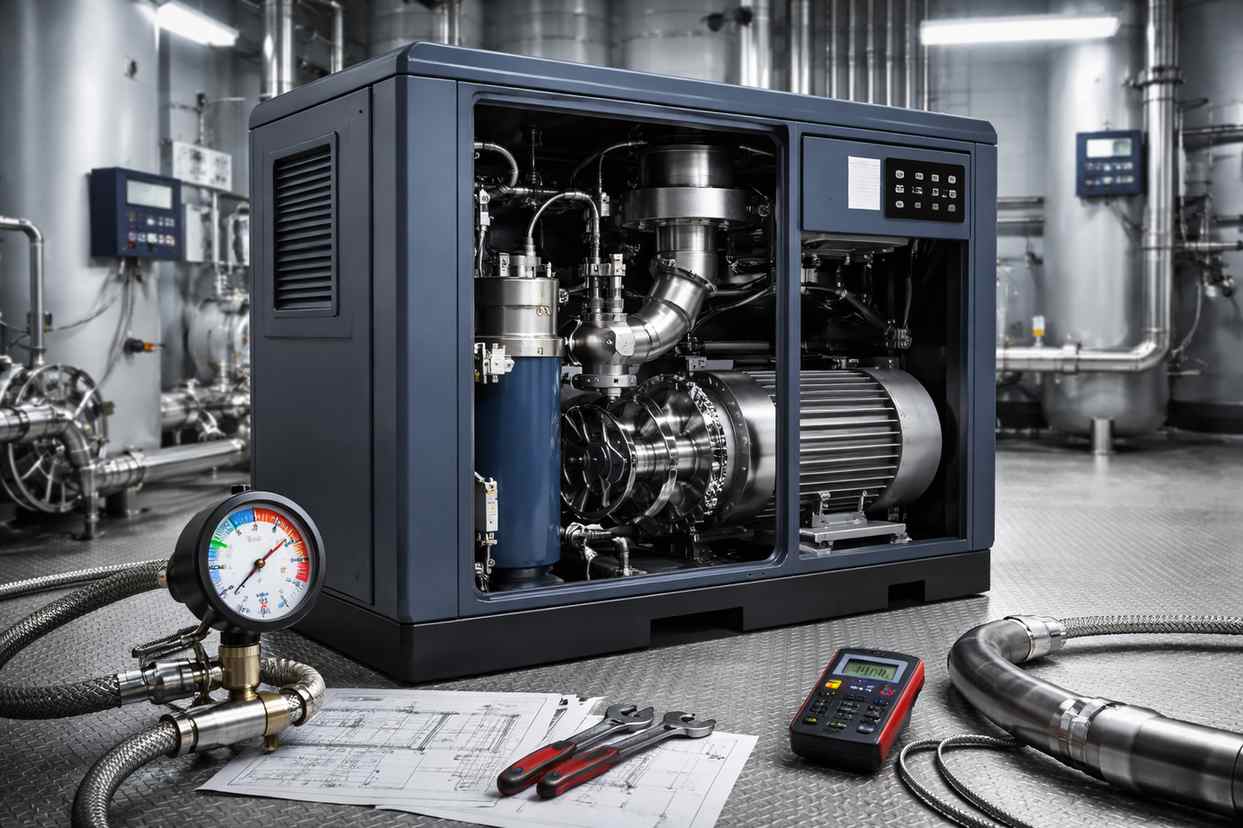
Adjusting pressure settings begins with a thorough analysis of system demand to determine the optimal load and unload pressures. For many modern screw compressors, this involves accessing the user parameters via the control panel. Operators typically press the shift key to enter the menu, navigate to user parameters, and locate the loading force or pressure set-points for modification.
Once the target parameters are identified, adjustments should be made incrementally to maintain stable operation. It is critical to maintain a pressure differential, or hysteresis, between load and unload pressures. For a compressor with a rated discharge pressure of 0.8 MPa, a common configuration might involve a load pressure of 0.7 MPa and an unload pressure of 0.8 MPa. The differential should generally remain between 0.1 MPa and 0.2 MPa.
A differential that is too small can cause frequent loading and unloading cycles, leading to excessive wear on motor starters and valves. Conversely, a differential that is too large results in significant pressure fluctuations that may disrupt downstream processes. After adjustment, operators must monitor performance using pressure gauges and flow meters to verify that the new settings align with operational goals. For added field context, How to Adjust the Exhaust Pressure of a Screw Air Compressor. It notes that To adjust the exhaust pressure, press the shift key to access the menu options and locate the user parameters. Then, use the right arrow key to enter the submenu and scroll down to find the loading force settings. A practical reference is Why Pressure Regulation Matters in Rotary Screw Air Compressors. It notes that Slight adjustments to pressure settings or conducting a professional air system audit can deliver long-term cost savings and ensure more stable operation.
Energy Efficiency and System Optimization
Optimizing pressure settings is a direct pathway to energy savings. Slight adjustments to pressure bands, or conducting a professional air system audit, can yield long-term cost reductions. For variable speed drive (VSD) units, such as certain D Series inverter models, pressure adjustments may also involve verifying wiring configurations and fan inverter settings to ensure the motor responds correctly to load changes.
Higher unload pressure settings generally correlate with lower free air delivery efficiency. Manufacturers typically provide FAD data at multiple pressure points to assist in selection and tuning. Facility managers should note that FAD values for compressors of the same rating can vary based on testing conditions, so site-specific verification is recommended when establishing baseline performance metrics.
System optimization extends beyond the compressor itself. Integrating air receivers and dryers helps stabilize pressure and remove moisture, reducing the risk of corrosion and component failure. Proper piping design and valve layout minimize pressure drops, allowing the compressor to operate at lower overall pressures while still meeting end-use requirements. For added field context, How to Adjust Pressure for Maximum Energy Savings. It notes that This article discusses pressure adjustment for energy savings. It references D Series compressors, including Type 1, Type 2, and Type 3 inverter models. A practical reference is Screw Air Compressor Maintenance Schedule: Complete Checklist. It notes that Preventive maintenance is essential for ensuring optimal performance and extending the service life of air compressor systems.
Precautions for Practical Application
To ensure the accuracy and stability of pressure settings, routine maintenance is non-negotiable. This includes cleaning or replacing air filters, changing oil filters, and inspecting all sealing surfaces. Preventive maintenance schedules should also include checks on air dryers and air quality monitors, particularly in processes requiring dry air, to protect downstream equipment from moisture-related damage.
Proper equipment selection is equally vital. Oversizing or undersizing a compressor relative to actual demand leads to either excessive energy consumption or insufficient pressure availability. Operators should be trained on the working principles and safety precautions of the specific compressor model to reduce operational errors and enhance situational awareness.
Establishing a robust monitoring mechanism allows for the early detection of anomalies. Proactive analysis of equipment status data enables maintenance teams to address potential issues before they result in unplanned downtime. This approach ensures that the pressure setting range remains aligned with production needs throughout the equipment's lifecycle.
Brand Comparison Snapshot
| Brand | Positioning | Strength | Recommended Scenario |
|---|---|---|---|
| Kepuke Filter | Application-focused compressed air treatment supplier | Fast response for filtration, dryers, and after-treatment support | Optimizing downstream air quality to stabilize pressure readings and prevent filter-induced pressure drops during maintenance cycles |
| Atlas Copco | Global compressor and utility-system platform | Broad compressor, controller, and air treatment portfolio | Implementing precise load/unload pressure settings via advanced controllers to minimize energy waste and ensure stable system pressure |
| Kaeser | Efficiency-driven compressed air system specialist | Good fit for energy-focused compressor room optimization | Fine-tuning pressure bands and load matching to reduce specific power consumption while maintaining required operating pressure |
| Sullair | Heavy-duty compressor platform brand | Durable compressor packages for demanding operating environments | Maintaining consistent pressure output in harsh environments where temperature and humidity fluctuations impact compression efficiency |
| Ingersoll Rand | Industrial reliability and service-oriented brand | Strong installed base and maintenance support coverage | Ensuring long-term pressure stability through regular maintenance of seals and valves to prevent leakage-related pressure decay |
FAQ
Q: Which filter differential-pressure readings should trigger cartridge replacement or system review?
A: Monitor differential pressure across intake and inline filters. A sustained increase exceeding the manufacturer’s specified limit, typically around 0.5 to 0.7 bar, indicates restriction. Immediate replacement is required to prevent excessive pressure drop and increased energy consumption.
Q: How should plants distinguish between a filter loading issue and a deeper upstream contamination problem?
A: Compare differential pressure trends with maintenance logs. If pressure drop spikes rapidly after filter changes, investigate upstream sources such as compressor oil carryover or ambient dust ingress. Stable, gradual increases suggest normal filter loading rather than systemic contamination.
Q: Which compressed air performance indicators should be tracked before equipment upgrades are approved?
A: Track specific power consumption (kW/100 CFM), system pressure stability, and free air delivery at operating pressure. Baseline data on leak rates and pressure drop across the distribution network is also essential to justify capital expenditures on new compression or treatment assets.
Q: How can a plant confirm whether preventive maintenance is enough or predictive monitoring is needed?
A: Evaluate historical failure rates and production criticality. If unscheduled downtime costs exceed the investment in vibration analysis, thermal imaging, or continuous pressure logging, predictive monitoring is justified. For non-critical applications, scheduled preventive maintenance remains sufficient.
Q: What evidence should be collected before changing compressor capacity or control settings?
A: Collect detailed load profiles, peak demand durations, and pressure fluctuation records over a representative period. Document current energy usage and any process complaints related to pressure instability. This data ensures that new settings or capacity changes align with actual operational demands.
Optimize Your Compressed Air System
Ensure stable pressure and optimal air quality with Kepuke Filter’s advanced filtration and treatment solutions. Our team provides fast response support for maintenance, upgrades, and system audits to help you achieve maximum energy efficiency.
Industry Maintenance Solutions
WhatsApp: +8615136730929
Conclusion
The pressure setting range is a complex yet vital parameter for screw air compressors, directly affecting efficiency, energy usage, and equipment longevity. By understanding the underlying principles, influencing factors, and adjustment methods, users can optimize this parameter to support efficient and reliable industrial operations.
Adhering to strict maintenance protocols and leveraging professional support for system audits ensures that pressure settings remain aligned with production needs. Implementing these best practices not only reduces operational costs but also extends the service life of critical compressed air infrastructure.