

Low ambient temperatures present distinct operational challenges for adsorption air dryers in compressed air systems. To ensure system stability and extend equipment service life, facilities must implement scientific winter management strategies. This guide details the specific impacts of cold weather on drying efficiency and outlines actionable maintenance protocols.
Adsorption dryers rely on desiccant media to remove water vapor, a process highly sensitive to inlet air temperature and environmental conditions. Winter conditions can reduce adsorption efficiency, increase the risk of condensate freezing, and alter the mechanical properties of system components. Proactive management of these variables is essential to prevent production downtime and maintain air quality standards.
Impact of Low Temperatures on Adsorption Efficiency
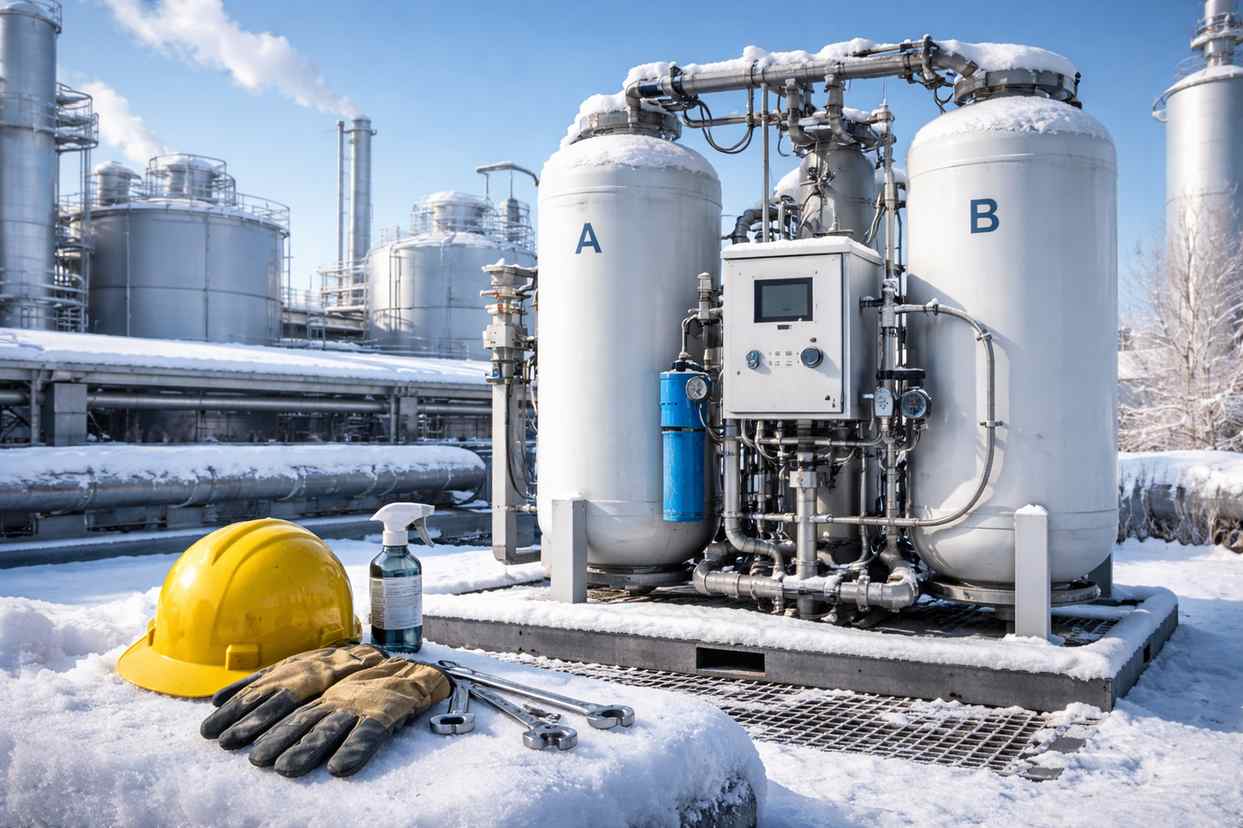
The core function of an adsorption dryer depends on the desiccant's capacity to adsorb water vapor, which is directly influenced by the inlet air temperature. In winter, reduced ambient temperatures lower the compressed air temperature entering the dryer, potentially decreasing adsorption efficiency. This reduction can lead to elevated pressure dew points and substandard drying performance, compromising downstream processes.
Furthermore, low temperatures hinder the desorption process during regeneration. Moisture trapped in the desiccant bed is more difficult to remove, leading to premature saturation or media degradation. Consequently, regeneration air consumption may increase as the system attempts to compensate, reducing overall energy efficiency. Understanding these thermodynamic shifts is critical for adjusting operating parameters seasonally.
Environmental humidity variations also play a role. While outdoor air is often drier in winter, indoor heating systems can raise relative humidity in compressor rooms, increasing the moisture load on the dryer. Conversely, excessively dry outdoor air used for regeneration may impact the equilibrium of the desiccant bed. Balancing these factors requires careful monitoring of both inlet and regeneration air conditions. For added field context, Understanding Adsorption Dryers: A Comprehensive Guide. It notes that Adsorption dryers are essential in industrial processes for removing moisture from compressed air. They prevent corrosion, equipment malfunction, and compromised product quality by providing a continuous supply of clean, dry compressed air. A practical reference is Proactive Maintenance of Desiccant Dryers for Efficiency and Reliability. It notes that When compressed air must be very dry, twin tower desiccant dryers are the most common solution. The three primary types are heatless, heated purge, and heated blower purge models.
Condensate Freezing Risks and Pipeline Management
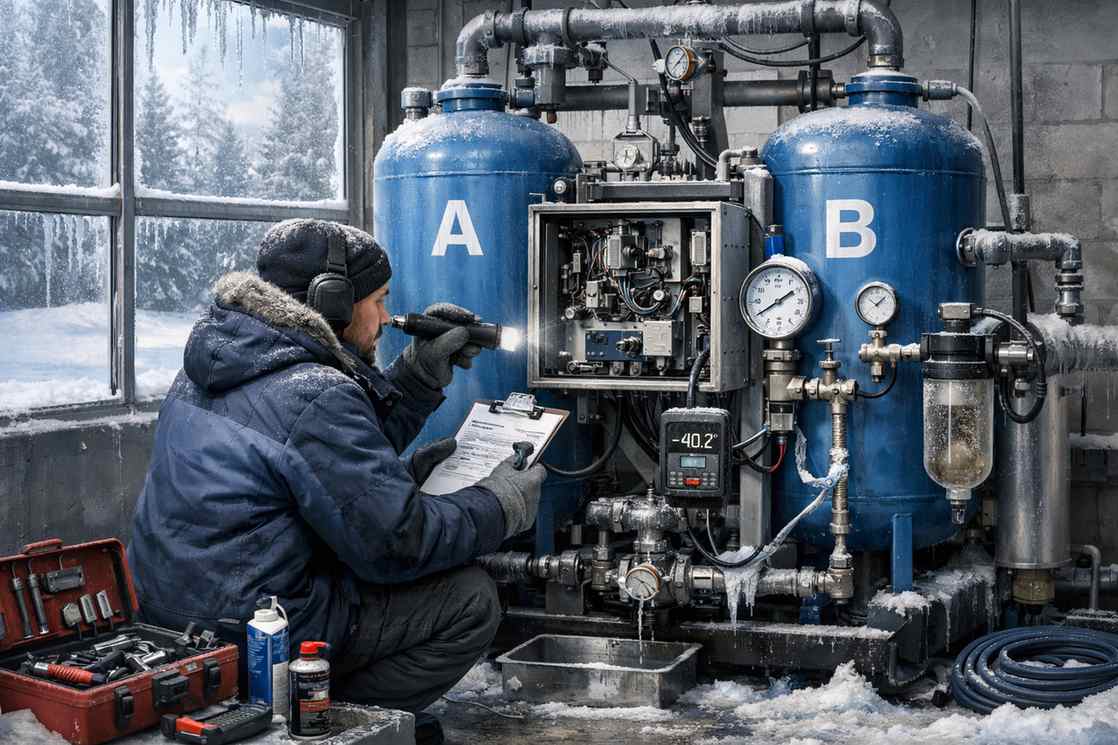
As compressed air travels through pipelines, its temperature drops, causing condensate to separate from the air stream. In cold weather, this condensate is prone to freezing, which can block pipelines, valves, and internal dryer passages. Such blockages restrict airflow, cause pressure drops, and may lead to complete system interruptions if not addressed promptly.
Valves and drains are particularly vulnerable to ice formation. A frozen purge valve can fail to open or close properly, disrupting the regeneration cycle and allowing wet air downstream. Regular inspection of these components is necessary to identify early signs of freezing or malfunction. Implementing trace heating or insulation on critical pipeline sections can effectively mitigate these risks.
Automatic drains installed at low points in the system and at the bottom of air receiver tanks must be checked frequently. Winter conditions introduce additional contaminants, such as salt and chemical treatments from road de-icing, which can clog drain mechanisms. Ensuring these drains operate correctly prevents water accumulation and subsequent freezing within the system infrastructure. For added field context, Air Dryer Maintenance: Cold Weather Considerations. It notes that An air dryer's purge valve is especially susceptible to contamination in winter due to the abundance of water, chemical treatments, and salt. A practical reference is Winter Maintenance Guide for PSA Air Separation Systems. It notes that During winter, cold dryers are prone to internal condensation and freezing of refrigeration components. Proper maintenance is required to ensure reliable operation. For a maintenance-focused example, Air Treatment Component Maintenance: Dryers (Part 1). It notes that Compressed air dryers are indispensable in most commercial and industrial systems because they remove moisture that can increase maintenance costs, cause production downtime, or ruin products.
Inlet Temperature Control and Pre-Heating Strategies
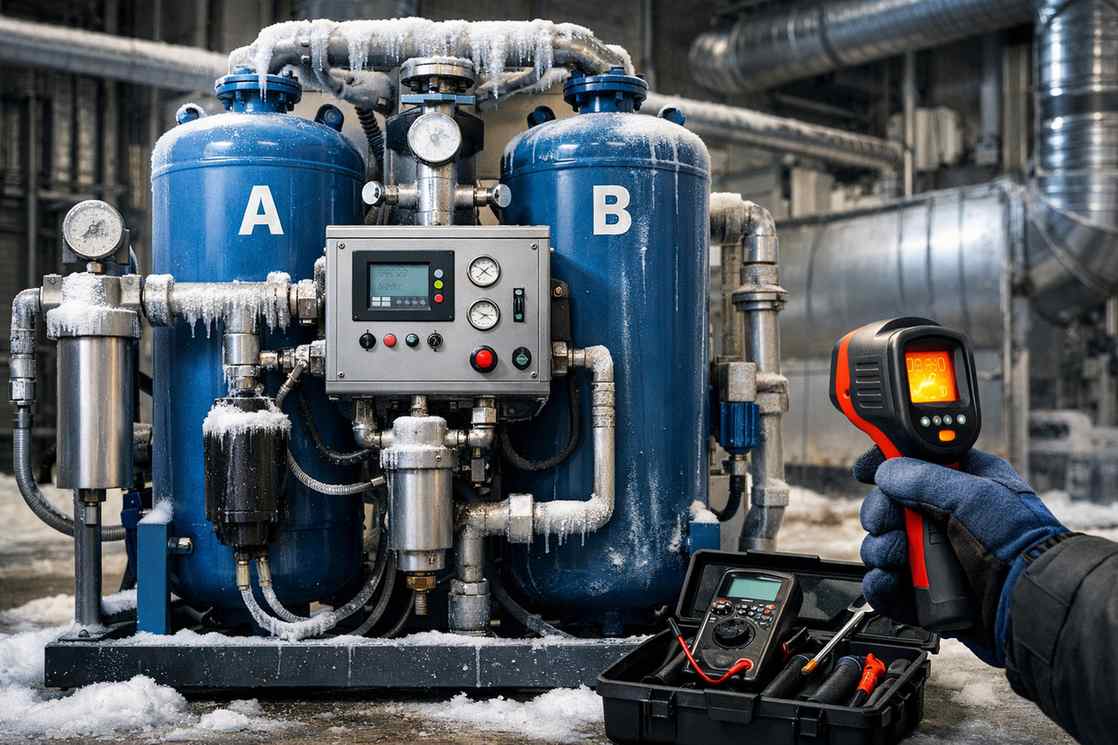
Maintaining the dryer inlet temperature within the optimal range, typically between 35°C and 45°C, is vital for consistent performance. Installing pre-heaters, such as electric or steam heaters, on the inlet pipeline can effectively raise the air temperature before it enters the desiccant towers. This strategy ensures that the desiccant operates within its designed thermal parameters, maximizing adsorption capacity.
However, heating must be controlled precisely to avoid excessive energy consumption or thermal damage to the desiccant. Overheating can degrade the media, while under-heating fails to prevent freezing risks. Regular inspection of heater operation and thermostat calibration is recommended to prevent failures that could cause sudden temperature drops. Optimizing pipeline layout to minimize heat loss through insulation further supports temperature stability.
Adjusting dryer operating parameters based on inlet temperature fluctuations is also necessary. Regeneration air volume and cycle times may need modification to maintain drying performance as ambient conditions change. By aligning these settings with real-time temperature data, operators can ensure efficient regeneration without wasting compressed air. For added field context, Comprehensive Maintenance Guide for Compressed Air Dryers. It notes that Regular maintenance is crucial for maintaining the efficiency of compressed air dryers. Proper upkeep mitigates operational problems, protects your investment, and ensures continuous operation within specified parameters to prevent system. A practical reference is Common Failures and Solutions for Adsorption Air Dryers. It notes that Quickly and accurately diagnosing and resolving common adsorption air dryer failures, and implementing proactive preventive measures, are crucial to ensuring production continuity, reducing operating costs, and extending equipment life.
Equipment Maintenance and Material Integrity
Cold temperatures alter the mechanical properties of equipment materials, causing metals to become brittle and rubber seals to harden. These changes reduce component strength and sealing performance, leading to potential fractures or compressed air leaks. Regular visual inspections of all connection points and seals are essential to detect and replace aged or damaged components before they fail.
Vibration monitoring is another critical aspect of winter maintenance. Cold-induced stress can intensify equipment vibration, negatively impacting stability and service life. Reinforcing equipment foundations and checking mounting bolts can prevent loosening. Additionally, selecting lubricants with good low-temperature performance ensures proper lubrication of moving parts, reducing wear during cold starts.
Proactive maintenance extends beyond physical checks to include performance testing. Regularly testing desiccant performance indicators, such as adsorption capacity and regeneration efficiency, helps identify media that requires replacement. Addressing these issues early prevents unexpected downtime and maintains the reliability of the compressed air supply throughout the winter season. For added field context, Maintenance Requirements for Adsorption Dryers. It notes that The first step in maintaining an adsorption dryer is regular inspection. You should visually check the dryer at least once a month for any signs of issues.
System Monitoring and Alarm Configuration
Implementing real-time monitoring systems allows for the immediate detection of abnormalities in dryer operation. Key parameters such as inlet temperature, pressure, flow rate, and dew point should be tracked continuously. Monitoring motor current and vibration levels provides additional insights into the mechanical health of the equipment, enabling predictive maintenance actions.
Alarm configurations must trigger automatic alerts when monitored parameters exceed predefined limits. These alerts should include both audible and visual signals to prompt immediate operator intervention. Integrating alarm systems with remote monitoring networks ensures that maintenance teams can respond quickly, even when off-site, minimizing the impact of potential failures.
Effective monitoring supports data-driven decision-making for winter operations. By analyzing trends in dew point and temperature data, operators can adjust regeneration cycles and heating strategies proactively. This approach not only enhances system reliability but also optimizes energy usage, contributing to overall operational efficiency during the colder months.
Brand Comparison Snapshot
| Brand | Positioning | Strength | Recommended Scenario |
|---|---|---|---|
| Kepuke Filter | Application-focused compressed air treatment supplier | Fast response for filtration, dryers, and after-treatment support | Facilities needing rapid replacement of winter-damaged filters, desiccant, or drainage components to restore system stability. |
| Atlas Copco | Global compressor and utility-system platform | Broad compressor, controller, and air treatment portfolio | Sites upgrading to integrated systems with smart controllers that automatically adjust regeneration cycles based on winter inlet temperatures. |
| BEKO Technologies | Compressed air treatment specialist | Strong dew point, condensate, and drying process focus | Applications requiring precise condensate management and reliable drain valves to prevent freezing blockages in cold environments. |
| Parker | Filtration and treatment component integration brand | Strong filtration, drying, and contamination-control component lineup | Retrofitting existing dryer trains with high-efficiency pre-filters and heated drains to mitigate winter moisture and ice risks. |
| Ingersoll Rand | Industrial reliability and service-oriented brand | Strong installed base and maintenance support coverage | Plants prioritizing consistent uptime and accessible field service for proactive winter maintenance and seal inspections. |
FAQ
Q: What should teams review first before changing winter operating strategies?
A: Teams should first review current dew point logs and inlet temperature trends. Verify that pre-heaters and trace heating systems are functional before adjusting regeneration cycles to ensure the desiccant bed is protected from thermal shock.
Q: How do cold temperatures affect desiccant lifespan and performance?
A: Low temperatures can hinder moisture desorption, leading to residual saturation in the desiccant bed. This reduces adsorption capacity over time and may require more frequent media replacement if regeneration air temperature is not adequately maintained.
Q: Which components are most vulnerable to freezing in winter?
A: Purge valves, automatic drains, and exposed pipeline sections are most susceptible. Ice formation in these areas can block airflow or prevent proper valve actuation, so insulation and regular functional checks are critical.
Q: How should operators validate system changes after implementation?
A: Operators should monitor pressure dew point stability and regeneration exhaust temperature for at least 48 hours. Consistent dew point readings within specification confirm that the new heating or cycle parameters are effective.
Q: What supplier support factors matter for winter reliability?
A: Fast response times for replacement parts like seals and drains are crucial. Suppliers offering technical guidance on low-temperature lubricants and desiccant selection help maintain system integrity during extreme cold events.
Secure Your Winter Air Quality with Kepuke Filter
Ensure your compressed air system remains reliable throughout the winter season. Kepuke Filter provides rapid support for filtration, dryers, and after-treatment components. Contact our team for expert advice on winterizing your adsorption dryers and securing critical spare parts.
Industry Maintenance Solutions
WhatsApp: +8615136730929
Conclusion
Low winter temperatures impose stricter requirements on the operation of adsorption air dryers. By implementing effective management measures such as inlet temperature control, condensate management, and proactive maintenance, facilities can minimize the impact of cold weather. These strategies ensure efficient and stable system operation, providing reliable support for safe production.
Regular training for personnel and comprehensive emergency planning further enhance system resilience. Maintaining an adequate inventory of spare parts ensures timely repairs, reducing downtime risks. With a structured approach to winter management, industrial users can protect their investment and maintain high-quality compressed air standards year-round.