

In low-temperature environments, oil-injected screw air compressors face significant operational challenges, including separator element failure, insufficient lubrication, airend seizure, and starting difficulties. Cold ambient temperatures increase oil viscosity, hindering flow to critical components during initial rotation. To ensure stable operation, specific professional procedures and precautions must be followed when starting the compressor in cold conditions.
This guide details the correct steps for executing a cold weather starting procedure oil-injected screw air compressor systems require. By adhering to strict pre-start checks, pre-heating protocols, and controlled jogging sequences, operators can prevent mechanical damage and ensure reliable performance throughout the winter season.
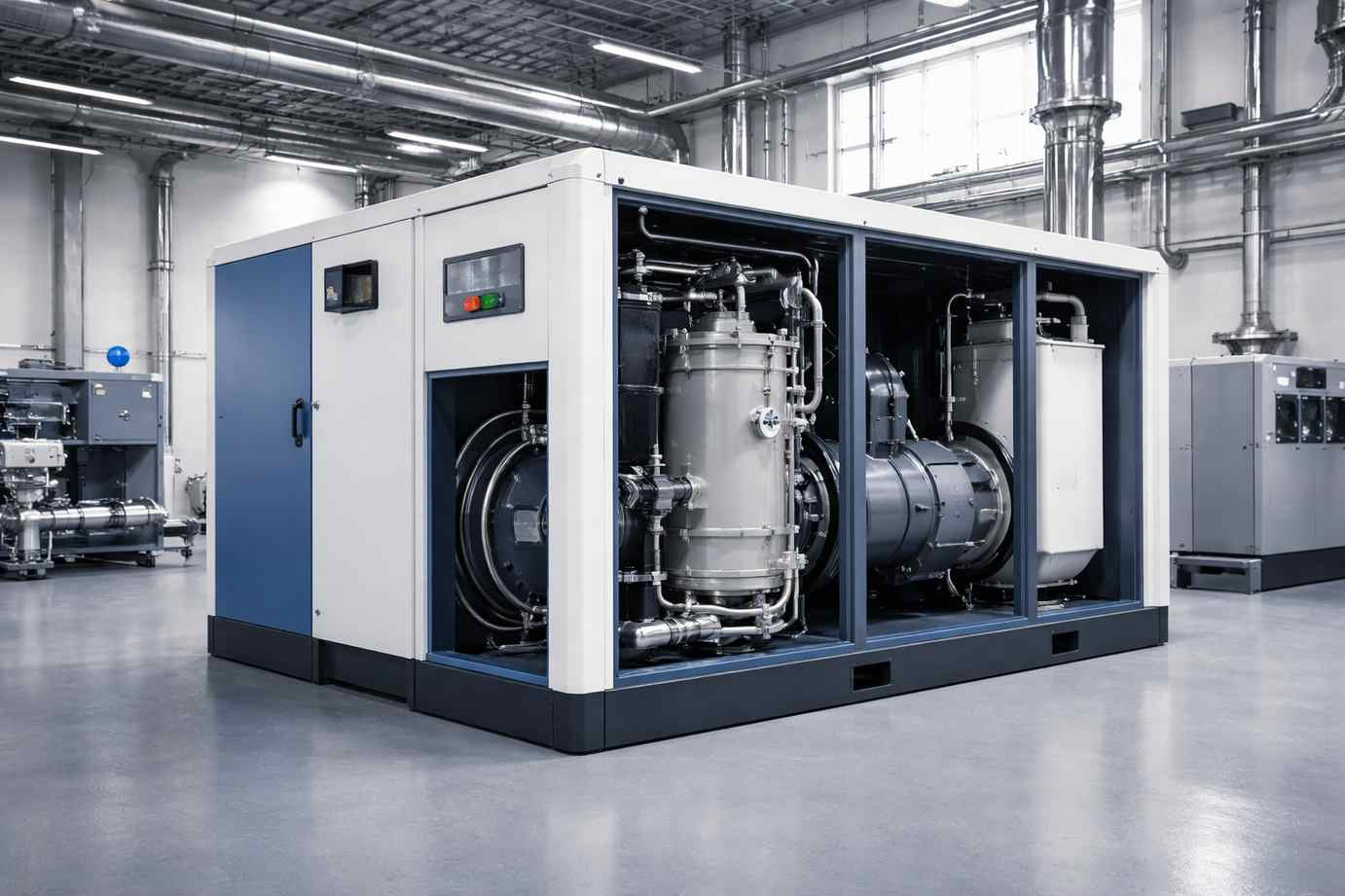
Pre-Start Inspection and Preparation
Before initiating any startup sequence, verify the lubricant level in the oil-gas separator tank. Ensure the oil level is within the specified range, typically between the upper and lower limits marked on the dipstick. If the level is low, add the specified lubricant immediately to guarantee adequate supply during initial startup. Inspect the oil for clarity and signs of contamination, as cold weather can exacerbate issues related to poor fluid quality.
Verify power supply integrity by ensuring electrical lines are intact, voltage is stable, and three-phase power is balanced. Unstable voltage or phase imbalance can damage the motor or prevent successful starting. Connect the power supply cable and earth wire securely, and confirm that the main voltage matches the equipment specifications. Additionally, inspect the control system by powering on the controller to check for any alarm or fault codes.
Confirm that all valve positions are correct for startup. Ensure the outlet valve is open and verify that other relevant valves, such as those in the cooling system, are in their correct operational positions. For units that are new or have been idle for an extended period, perform manual pre-lubrication. Add oil through the intake port and rotate the coupling manually for several revolutions to ensure sufficient lubrication is present at the airend before energizing the motor. For added field context, Cold-Weather Prep for Compressed Air Systems. It notes that Check compressor oil level and clarity, inspect hoses and couplers for signs of brittleness, and listen for unusual sounds during startup. A practical reference is Operating Procedures for Oil-Injected Screw Air Compressors. It notes that Connect the power supply cable and earth wire. Verify that the main voltage is correct and confirm the three-phase power supply phase sequence is correct. For a maintenance-focused example, Essential Compressor Safety Checklist Before Starting. It notes that Inspect for visible damage, verify all guards and shields are in place, check fluid levels, and drain condensate traps and tanks.
Pre-Heating and Motor Jogging Protocol
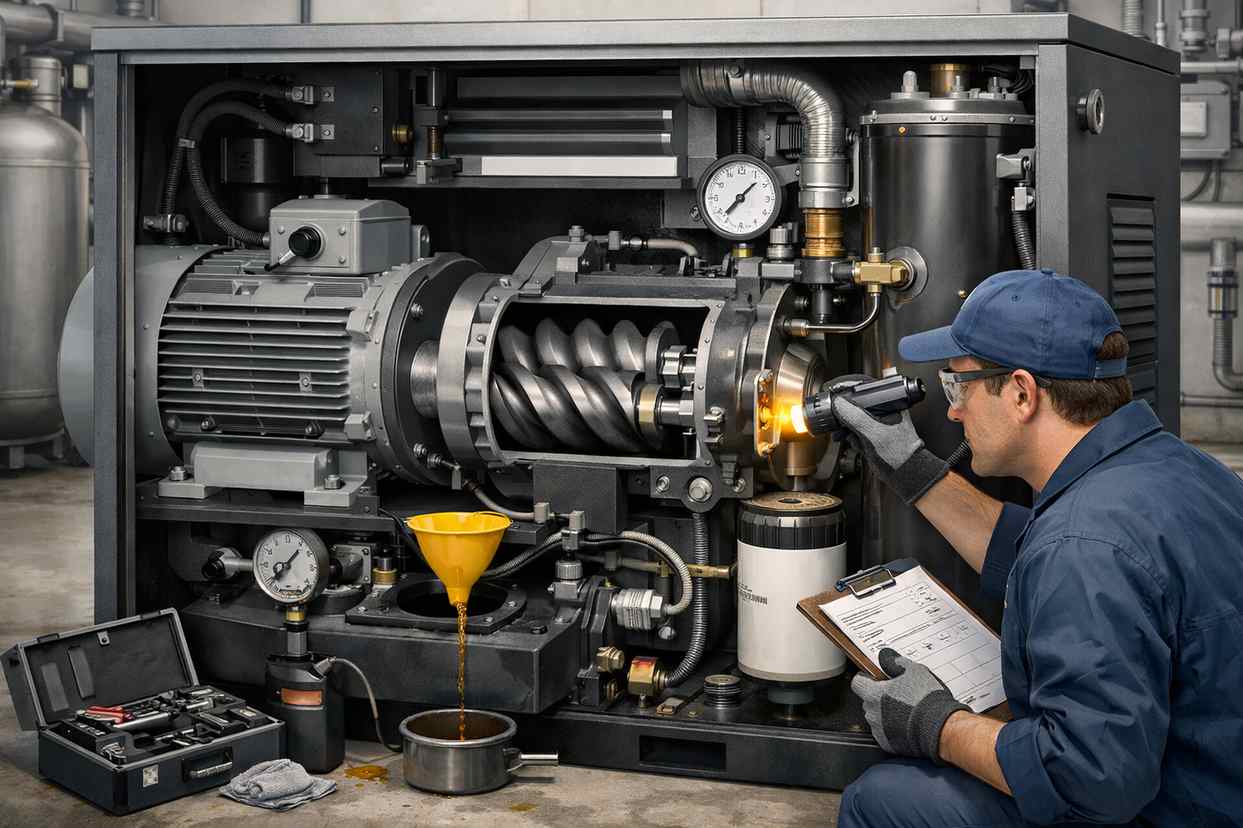
In cold weather, the lubricant in the separator tank may become viscous, hindering flow. Pre-heat the oil-gas separator tank before starting if the unit is equipped with a crankcase heater or external heating element. Monitor the sight glass closely during heating to prevent overheating, which could cause seal damage and oil leaks. Maintaining optimal oil temperature reduces viscosity and ensures rapid lubrication distribution upon startup.
Jogging the motor is a critical step in cold starts to circulate oil without imposing full load. Press the start button to run the compressor for approximately 6 to 8 seconds, then press the Emergency Stop button to halt it. Wait 30 seconds, then repeat this process. Perform three jogging cycles before attempting a formal start. This method allows oil to reach bearings and rotors gradually, preventing dry running conditions.
It is imperative to use the Emergency Stop button to halt the unit during jogging. Do not use the standard Stop button, as it initiates a controlled shutdown sequence that takes longer than the jogging duration. Due to high oil viscosity, lubrication may not reach critical components quickly enough during this extended sequence. Therefore, always use the Emergency Stop to cut power immediately after each jog cycle to protect the airend. For added field context, Industrial Air Compressor Cold Weather Guide: Prevent Winter Downtime. It notes that This guide provides strategies to prevent winter downtime in manufacturing facilities using industrial air compressors. A practical reference is Air Compressor Maintenance Guide For Cold Weather. It notes that Use manufacturer-recommended low-temperature lubricant, check oil level before every start-up, and pre-run the compressor without load for 5–10 minutes.
Startup Execution and Rotation Verification
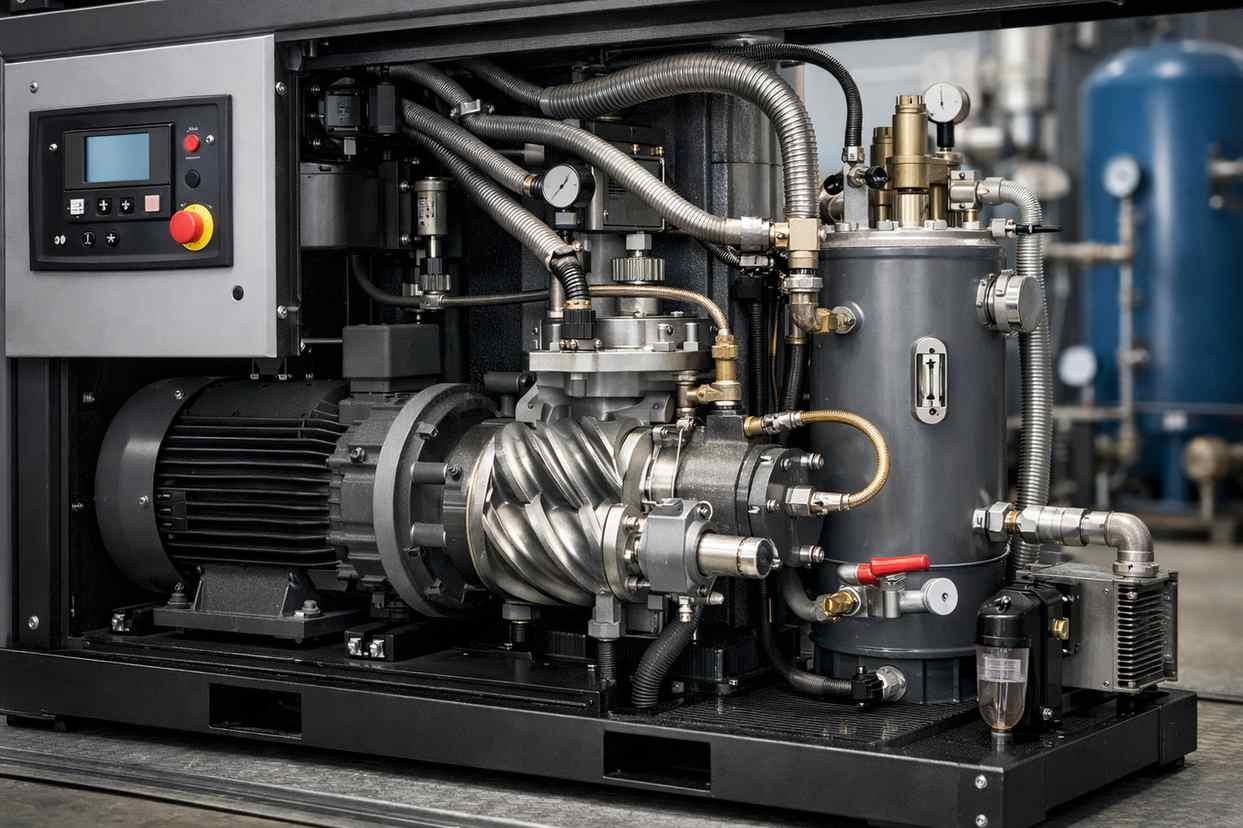
After completing the jogging cycles, initiate the formal start sequence. Verify the rotation direction during the first startup, especially if power connections were recently modified. The compression host is marked with a rotation arrow at the factory. Observe the motor direction after starting. If the rotation is reversed, swap any two of the three phase lines to correct it immediately to prevent severe mechanical damage.
Before starting, ensure the valve at the exhaust outlet is fully open. It must remain in the normally open position. If closed, pressure cannot be released upon startup, causing the safety valve on the oil-gas separator tank to lift and eject internal compressor oil. This safety precaution prevents over-pressurization and potential hazardous oil spills within the compressor enclosure.
Open the compressor enclosure and inspect the interior for any signs of running, leaking, or dripping fluids during the initial moments of operation. If any such issues are observed, contact manufacturer support for immediate on-site handling. While the enclosure is open, re-check the screw compressor oil level to ensure it is within the safe operating range, as an incorrect oil level may cause high-temperature shutdowns shortly after startup. For added field context, Cold Weather Tips for Compressors. It notes that As fall and winter approach, compressed air system maintenance becomes more complex in colder climates. Freezing temperatures can negatively affect compressors, dryers, and various accessories. A practical reference is Cold Weather Air Compressor Maintenance Tips – Fluid-Aire Dynamics. It notes that Fluid-Aire Dynamics provides tips on maintaining compressed air systems and air compressors during cold weather to ensure continuous operation in winter.
Operational Monitoring and Load Management
After startup, continuously monitor operating temperature and pressure. Keep these parameters within the manufacturer's recommended ranges. Excessive temperature or abnormal pressure can lead to equipment failure or damage. Adjust or confirm the load and unload settings based on compressed air demand to ensure energy efficiency and protect the equipment. Avoid prolonged unloaded operation or overloaded conditions, which can destabilize oil temperatures in cold environments.
Conduct auditory and visual inspections regularly. Listen for abnormal noises and observe for excessive vibration, oil leaks, or other visible issues. Any anomaly may indicate impending equipment failure. Record the startup time and adhere to the manufacturer's recommended maintenance schedule. Regularly replace filters, lubricants, and other consumables to maintain system integrity.
When shutting down the screw air compressor, thoroughly drain condensate from the air receiver, dryer, and pipelines. This prevents freezing damage to electronic components and ice formation inside the equipment due to low temperatures. Proper drainage is essential to prevent blockages in downstream treatment equipment and ensure the system is ready for the next cold start. For added field context, Cold Weather Maintenance and Best Practices - Rolair Systems. It notes that Rolair Systems outlines cold weather maintenance best practices to keep air compressors running smoothly. Most models ship with blended synthetic air compressor oil in the pump crankcase.
Special Considerations for Extreme Cold
In extreme weather below freezing, the compressor room must be heated. Without heating, the compressor temperature will drop sharply after shutdown. This increases oil viscosity and reduces fluidity, potentially triggering high-temperature alarms during the next startup due to poor lubrication flow. Maintaining a minimum ambient temperature in the compressor room is a key strategy to prevent winter downtime.
For units equipped with coaxial asynchronous motors or permanent magnet motors that cannot be manually rotated, strictly follow the multi-cycle jogging procedure before full startup. This prevents airend damage caused by oil starvation. Select lubricants appropriate for the season, using low-pour-point lubricants in winter to ensure smooth circulation and prevent insufficient oil supply.
If the unit is equipped with a waste heat recovery system, keep it closed or isolated during startup. Only engage the heat recovery system gradually after the compressor has started normally and reached its standard operating temperature. Early activation can cause equipment faults or damage due to thermal shock or restricted oil flow. Operators must strictly adhere to all safety regulations outlined in the operation manual.
Brand Comparison Snapshot
| Brand | Positioning | Strength | Recommended Scenario |
|---|---|---|---|
| Kepuke Filter | Application-focused compressed air treatment supplier | Fast response for filtration, dryers, and after-treatment support | Upgrading downstream filtration and dryers to handle increased condensate and oil carryover risks during cold starts |
| Atlas Copco | Global compressor and utility-system platform | Integrated controllers with ambient temperature compensation and pre-lubrication logic | Facilities seeking automated cold-start protocols and integrated system monitoring to prevent low-temperature faults |
| Ingersoll Rand | Industrial reliability and service-oriented brand | Extensive field service network for winter maintenance and emergency troubleshooting | Plants requiring reliable on-site support for oil viscosity checks, heater inspections, and startup assistance in freezing conditions |
| Sullair | Heavy-duty compressor platform brand | Robust rotary screw designs suited for demanding environmental conditions | Operations needing durable compressor packages that withstand thermal stress and frequent cold-weather cycling |
| BEKO Technologies | Compressed air treatment specialist | Specialized condensate management and drying solutions for moisture control | Systems requiring enhanced condensate drainage and freeze-protection strategies to prevent pipe and dryer blockages in winter |
FAQ
Q: What should teams review first before changing cold weather starting procedure oil-injected screw air compressor operating strategy?
A: Teams should first verify the current lubricant viscosity rating and ensure it matches the manufacturer's low-temperature specifications. Check the functionality of crankcase heaters and inspect oil levels for clarity before modifying any startup protocols.
Q: How should maintenance records support future decisions about cold weather starting procedure oil-injected screw air compressor?
A: Maintenance records should document ambient temperatures, oil viscosity readings, and any startup anomalies such as high current draws or delayed pressure build-up. This data helps refine jogging durations and pre-heating requirements for subsequent winters.
Q: How should operators validate a cold weather starting procedure oil-injected screw air compressor change after implementation?
A: Operators should monitor oil temperature rise rates and discharge pressure stability during the first week of implementation. Consistent temperature curves and absence of low-oil-pressure alarms indicate the new procedure is effective.
Q: Which supplier factors matter most for long-term cold weather starting procedure oil-injected screw air compressor reliability?
A: Supplier responsiveness for emergency winter service and availability of low-pour-point lubricants are critical. Choose suppliers who provide detailed ambient temperature operating limits and support for heater maintenance.
Q: What are the risks of skipping the jogging phase in low temperatures?
A: Skipping jogging can lead to oil starvation in the airend bearings and rotors due to high viscosity. This increases friction, causes premature wear, and may result in catastrophic seizure during the initial startup phase.
Optimize Your Cold Weather Air System Performance
Ensure your compressed air system remains reliable throughout the winter with expert guidance and high-quality filtration solutions. Kepuke Filter provides specialized support for managing condensate and oil carryover risks associated with cold starts. Contact our technical team for customized advice on filtration upgrades and maintenance strategies.
Industry Maintenance Solutions
WhatsApp: +8615136730929
Conclusion
Starting an oil-injected screw air compressor in low-temperature environments requires strict adherence to professional procedures. By carefully executing pre-heating preparations, jogging operations, startup checks, operational monitoring, and special precautions, stable compressor performance can be ensured. Regular maintenance is also essential to extend equipment lifespan and minimize failure rates.
Implementing these structured protocols protects critical components from thermal stress and lubrication failures. For ongoing support and advanced filtration solutions to handle winter-specific condensate challenges, rely on experienced partners like Kepuke Filter to maintain system efficiency and reliability.