

Screw air compressors are critical assets in manufacturing, valued for stable performance and energy efficiency. However, operational stability is often compromised by current fluctuations during runtime. These electrical anomalies frequently signal underlying mechanical or systemic issues that, if unaddressed, lead to increased energy consumption, reduced equipment lifespan, and potential safety hazards.
This technical guide analyzes the primary drivers of current instability in rotary screw compressors. By understanding the interplay between load dynamics, power supply quality, and mechanical integrity, maintenance teams can implement targeted corrective actions. Effective management of these variables ensures consistent compressed air delivery and protects motor insulation from thermal degradation.
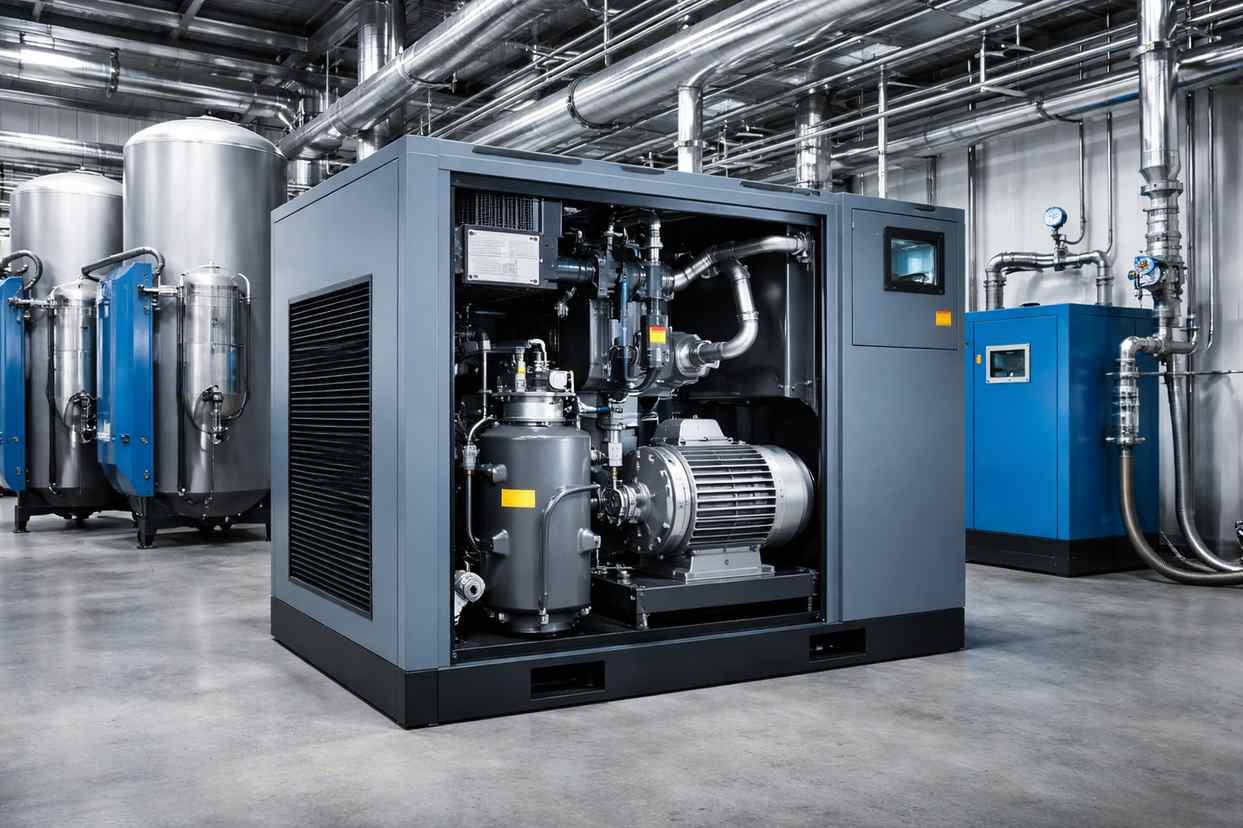
Load Dynamics and Pressure Regulation Impact
Load fluctuation is a primary driver of current instability. Significant changes in air demand force the compressor motor to adjust torque output rapidly. When production loads spike, the motor draws higher current to maintain pressure; conversely, sudden drops in demand reduce current draw. This cyclical variation stresses the electrical system and leads to inefficient operation if not properly buffered.
Pressure regulation plays a pivotal role in stabilizing these loads. Inconsistent pressure bands cause frequent loading and unloading cycles, which manifest as current swings. Maintaining tight pressure control ensures the compressor operates within an optimal range, reducing the frequency of high-current startup events during load transitions. Stable pressure directly correlates with smoother current profiles and improved system reliability.
To mitigate these effects, operators should optimize production scheduling to smooth out peak demand periods. Additionally, increasing the capacity of the air receiver tank provides a physical buffer against rapid load changes. This storage volume allows the compressor to respond more gradually to demand shifts, minimizing abrupt current spikes and protecting the motor from excessive thermal cycling. For added field context, Why Pressure Regulation Matters in Rotary Screw Air Compressors. It notes that Pressure fluctuations can cause serious performance issues, such as inconsistent air tool torque or defects in automated systems. Maintaining stable pressure is crucial for reliable operation. A practical reference is Causes and Solutions for Overload Trips in Screw Compressors. It notes that Root causes of overload trips include abnormal power supply voltage, excessive discharge pressure, and electrical circuit or component failures.
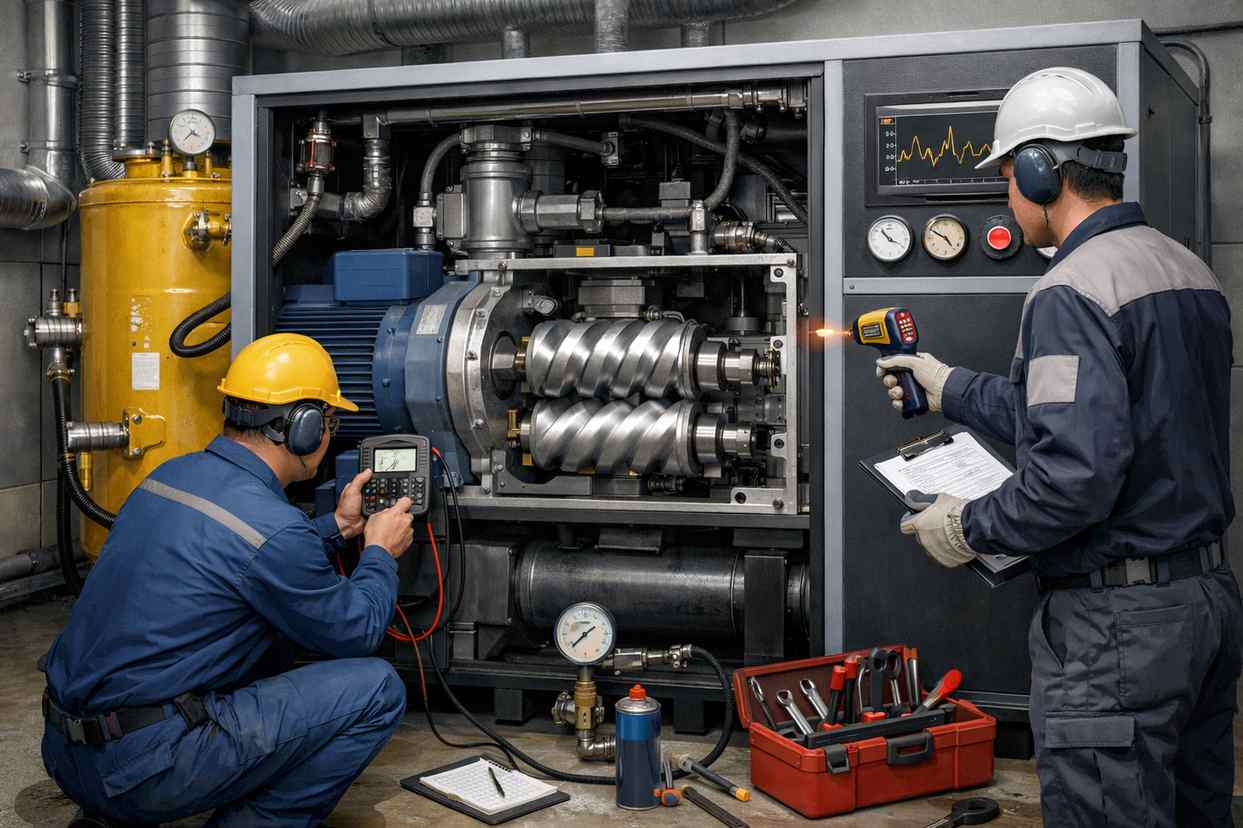
Power Supply Stability and Voltage Issues
Incoming power supply stability is fundamental to consistent compressor operation. Voltage fluctuations, whether due to grid instability, line losses, or faulty distribution equipment, directly impact motor current. When voltage drops, the motor must draw increased current to maintain rated power output and speed, leading to overheating and potential insulation failure. Conversely, voltage spikes can cause immediate current surges that trip protective devices.
Unstable three-phase voltage or phase loss conditions are particularly detrimental. These imbalances create uneven magnetic fields within the motor, resulting in vibration, noise, and erratic current readings. Continuous grid voltage monitoring is essential. If abnormal levels are detected, immediate equipment isolation is necessary to prevent catastrophic motor damage. Installing voltage stabilizers or regulated power supplies significantly enhances operational stability in environments with poor power quality.
Electrical connections must also be inspected regularly. Loose terminals or corroded contacts introduce resistance, causing localized heating and voltage drops at the motor terminals. Ensuring tight, clean connections throughout the power circuit helps maintain consistent voltage delivery. Furthermore, verifying that the power supply infrastructure matches the compressor’s rated requirements prevents inherent mismatches that lead to chronic current fluctuations. For added field context, Impact of Voltage Fluctuations on Box-Type Screw Air Compressors. It notes that When the voltage is too low, the motor has to work harder to maintain its speed and power output. A practical reference is Causes of Excessive Current and Power Consumption in Screw Air Compressors. It notes that Excessive current and power consumption can be caused by excessively high compressor temperatures. Unstable three-phase voltage, phase loss, and other motor working conditions also contribute to these issues. For a maintenance-focused example, Causes and Solutions for Screw Air Compressor Startup Failures. It notes that Common problems include blown fuses, damaged electrical components, or poor contact. To resolve these issues, first check the power supply to ensure proper connection.
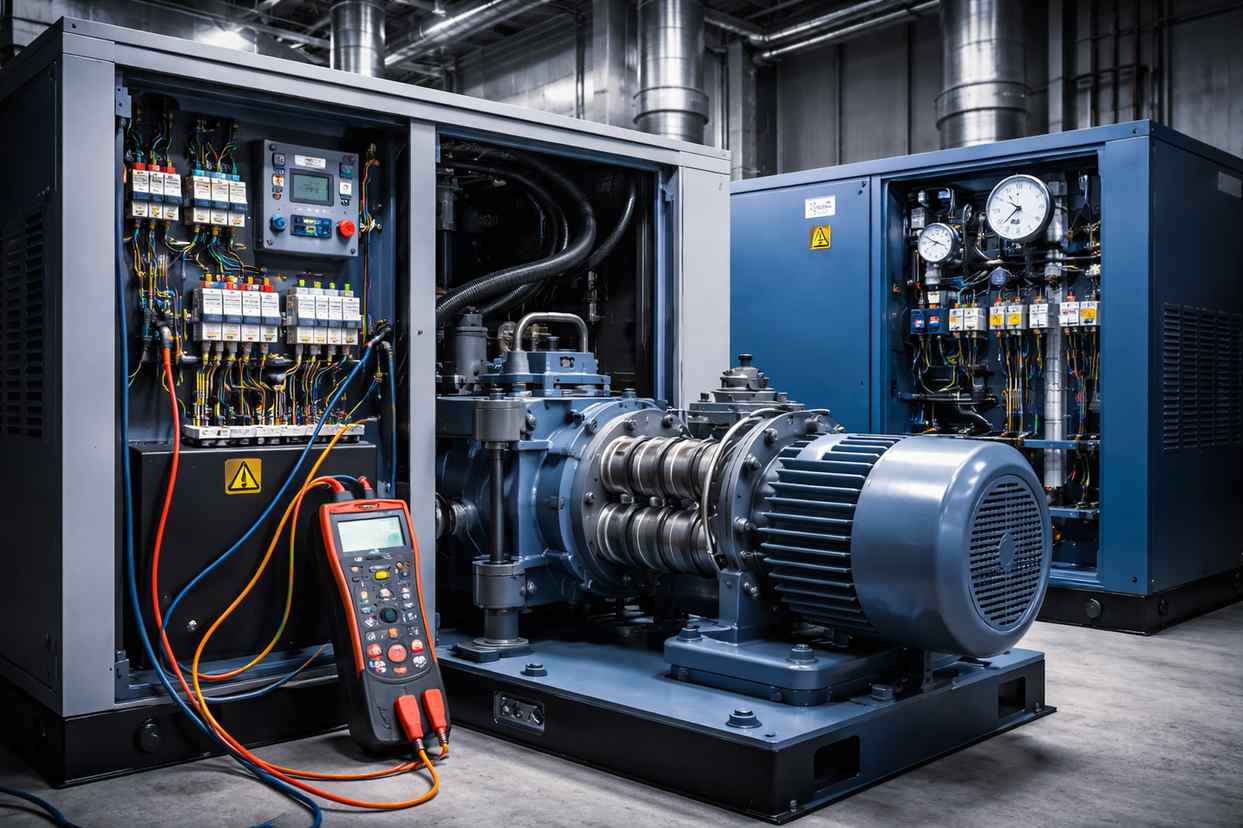
Mechanical Transmission and Component Wear
Mechanical failures in the transmission system are frequent contributors to current instability. In belt-driven units, loose or worn belts can slip under load, causing the motor to spin faster than the airend while delivering less compression. This slippage results in erratic current draw as the motor struggles to maintain torque. Similarly, damaged bearings increase friction within the rotor assembly, forcing the motor to work harder and draw excessive current.
Aging components beyond the transmission system also play a role. Intake filters clogged with particulate matter restrict airflow, creating a vacuum effect that increases the load on the motor. Coolers fouled with debris reduce heat dissipation efficiency, leading to higher operating temperatures. Both conditions force the motor to operate outside its optimal efficiency curve, resulting in current fluctuations and increased energy consumption.
Regular inspection of belts, bearings, and filters is crucial. Belt tension should be adjusted according to manufacturer specifications, and worn belts replaced promptly. Bearings should be lubricated and monitored for signs of wear or unusual noise. Replacing intake filters before they become fully blocked ensures unrestricted airflow, reducing the mechanical load on the motor and stabilizing current draw during operation. For added field context, 11 Most Common Screw Air Compressor Problems and Solutions. It notes that Common issues include burnt odors, abnormal friction noise, and fluctuating current caused by belt slippage; solutions involve adjusting belt tension or replacing belts. Oil starvation may also cause screeching noises. A practical reference is The Importance of Screw Compressor Maintenance Schedules. It notes that Common maintenance issues with screw compressors include starting difficulties, stalling, pressure build-up problems, failure to load, and oil carryover.
Thermal Management and Lubrication Integrity
Excessive operating temperature is a critical factor in current fluctuation. Screw compressors generate significant heat during compression. If the cooling system is inadequate or fouled, heat buildup can degrade motor insulation, leading to short circuits or ground faults that manifest as current spikes. High oil temperatures also reduce lubrication viscosity, increasing internal friction and mechanical resistance within the airend, which raises motor current demand.
Lubricant compatibility and condition are equally important. Using incompatible oils or failing to completely drain old lubricant during maintenance can lead to carbon deposit formation. These deposits restrict oil flow and impair heat transfer, causing localized overheating and overcurrent conditions. For instance, mixing synthetic oils has been shown to cause carbon buildup, triggering electrical fault alarms after extended operation.
To prevent thermal-induced current issues, maintain oil temperatures within the recommended range, typically between 30°C and 50°C. Regularly clean coolers and replace lubricants according to the manufacturer’s schedule. Installing temperature monitoring devices allows for early detection of overheating trends, enabling proactive maintenance before thermal stress impacts electrical performance. Proper thermal management ensures consistent lubrication and efficient motor operation.
Electrical System Optimization and VFD Integration
Optimizing the electrical system is a strategic approach to resolving persistent current fluctuations. This involves checking all electrical connections for integrity, identifying potential short circuits, and ensuring that protective devices are correctly sized. In many cases, upgrading to a Variable Frequency Drive (VFD) can significantly stabilize current demand. VFDs allow the motor speed to match air demand precisely, eliminating the high-current spikes associated with traditional load/unload control methods.
However, VFD implementation requires careful configuration. Incorrect settings, such as setting the acceleration time too short, can cause high startup current spikes that mimic mechanical faults. Additionally, aging hardware within the drive itself, such as degraded current detection components, can provide false readings or fail to regulate output effectively. Regular calibration and firmware updates are necessary to ensure the drive performs as intended.
For facilities experiencing chronic voltage instability, integrating power conditioning equipment alongside VFDs offers a robust solution. This combination protects the compressor from grid disturbances while optimizing motor efficiency. By smoothing out power delivery and matching motor output to real-time demand, operators can achieve a stable current profile, reduced energy costs, and extended equipment lifespan. This holistic electrical optimization addresses both supply-side and demand-side variables. For added field context, Common Screw Air Compressor Inverter Faults: A Practical Guide. It notes that Incorrect inverter settings, such as a too-short acceleration time parameter, can cause high startup current spikes. Aging hardware, including degraded current detection components, is another common fault.
Brand Comparison Snapshot
| Brand | Positioning | Strength | Recommended Scenario |
|---|---|---|---|
| Kepuke Filter | Application-focused compressed air treatment supplier | Fast response for filtration, dryers, and after-treatment support | Replacing clogged intake or oil filters that increase motor load and cause current spikes |
| Atlas Copco | Global compressor and utility-system platform | Broad compressor, controller, and air treatment portfolio | Upgrading to advanced controllers that stabilize load changes and smooth current demand |
| Ingersoll Rand | Industrial reliability and service-oriented brand | Strong installed base and maintenance support coverage | Diagnosing transmission faults like belt slippage or bearing wear that trigger current fluctuation |
| Kaeser | Efficiency-driven compressed air system specialist | Good fit for energy-focused compressor room optimization | Optimizing system pressure bands to reduce frequent loading/unloading cycles and current instability |
| Sullair | Heavy-duty compressor platform brand | Durable compressor packages for demanding operating environments | Addressing high operating temperatures and cooling issues that degrade motor efficiency and raise current |
FAQ
Q: Which filter differential-pressure readings should trigger cartridge replacement?
A: Monitor the differential pressure across intake and oil filters. A reading exceeding the manufacturer’s specified limit (typically 0.5–0.7 bar for intake filters) indicates restricted airflow. This restriction increases motor load and current draw. Replace cartridges immediately upon reaching this threshold to prevent excessive current fluctuation and maintain efficiency.
Q: How can plants distinguish between filter loading and upstream contamination?
A: If filter replacement does not stabilize current or reduce differential pressure, investigate upstream sources. Check for excessive ambient dust, oil carryover from previous stages, or chemical vapors. Persistent rapid clogging suggests an environmental issue rather than normal wear. Addressing the source contamination is necessary to prevent recurring motor load spikes.
Q: Which performance indicators should be tracked before approving upgrades?
A: Track specific power (kW/100 cfm), pressure stability, and current variance over a full production cycle. Baseline data on load/unload frequency and peak current demands provides objective evidence for upgrade justification. Consistent high variance in these metrics indicates inefficiency that newer controls or VFDs can resolve.
Q: When is predictive monitoring needed over preventive maintenance?
A: If current fluctuations persist despite adhering to standard maintenance schedules, predictive monitoring is required. Install vibration sensors and thermal cameras to detect early bearing wear or insulation degradation. Predictive tools identify subtle anomalies before they cause significant current spikes, allowing for targeted interventions rather than routine part replacement.
Q: What data should be collected before changing control settings?
A: Collect detailed logs of voltage stability, ambient temperature, and actual air demand patterns. Document any correlation between production shifts and current spikes. This data ensures that control adjustments address root causes like load mismatch rather than masking symptoms. Verify that power infrastructure can handle new control dynamics before implementation.
Stabilize Your Compressor Performance
Eliminate current fluctuations and protect your equipment with precision filtration and expert support. Kepuke Filter provides application-focused solutions for intake and oil filtration, ensuring optimal motor load and consistent operation. Contact our technical team for immediate assistance.
Industry Maintenance Solutions
WhatsApp: +8615136730929
Conclusion
Current fluctuations in screw air compressors are complex issues rooted in mechanical, electrical, and operational factors. By systematically addressing load dynamics, power supply stability, transmission integrity, and thermal management, facilities can restore consistent performance. Regular maintenance, combined with strategic upgrades like VFD integration, offers a sustainable path to reliability.
Proactive monitoring and adherence to manufacturer guidelines are essential for long-term equipment health. Ignoring early signs of current instability can lead to costly repairs and unplanned downtime. Implementing the solutions outlined in this guide ensures that your compressed air system remains efficient, safe, and productive, maximizing the return on your industrial investment.